















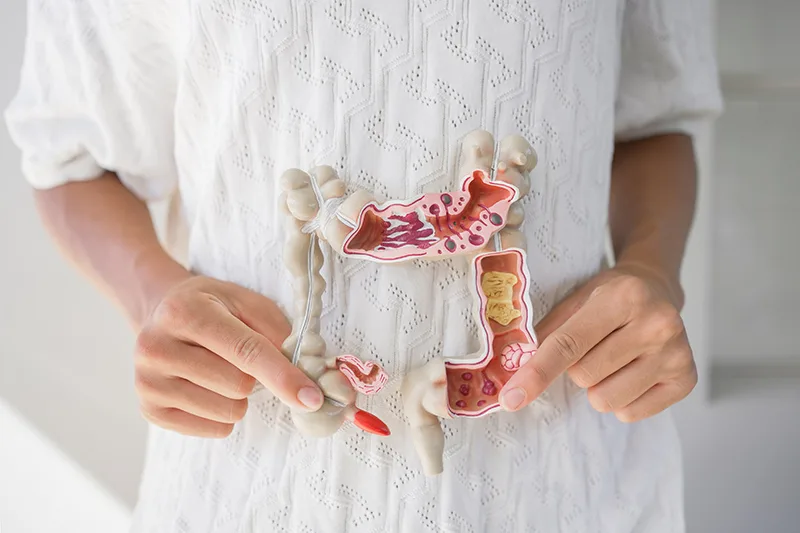
A common misconception in personal health management is the belief that no pain equals to no problem. Many individuals assume that if they maintain a balanced diet, exercise regularly, and have no noticeable changes in their bowel habits, their colorectal health is naturally secure. However, this relies on the dangerous assumption that the body always provides an early warning signal when a pathology begins to develop.
In reality, the most effective time to undergo a colonoscopy is precisely when you feel your absolute best. The absence of symptoms is often the best window where the procedure remains purely preventative. By the time physical red flags—such as abdominal discomfort or persistent fatigue—manifest, the opportunity to detect a condition in its earliest stage may be reduced.
The Stealthy Evolution of Colorectal Disease
The transition from a healthy colon to a malignant growth is a gradual, biological process that often spans a decade. This silent window occurs as benign adenomatous polyps undergo slow genetic mutations, allowing them to remain undetected within the colon lining for years without causing any physical discomfort.
These clinical factors explain why significant internal changes often remain hidden behind a veneer of perfect health:
- Structural Latency: Symptoms like abdominal pain or bloating often appears later once a tumour has reached a significant size or caused a physical obstruction in the colon.
- Vascular Integrity: Visible bleeding often doesn't occur until a lesion becomes large enough to erode nearby blood vessels, meaning many early-stage growths remain entirely asymptomatic.
- Nerve Sensitivity: Because the inner lining of the colon is less sensitive to pain, microscopic cellular changes and early dysplasia can progress without triggering the body's sensory alarm.
Screening vs. Diagnostic: Why Stool Tests Aren't Enough
When discussing colorectal health, it's vital to distinguish between a reactive screening and a proactive intervention. Many well individuals rely on stool-based tests, such as the faecal immunochemical test (FIT), as their primary line of defence.
However, understanding the clinical limitations of these tests is essential for a realistic assessment of your health:
- Reactive vs. Proactive Methodology: The FIT kit is fundamentally reactive; it's designed to detect traces of blood that leak from an existing tumour or a large, advanced polyp. In contrast, a colonoscopy is a proactive clinical tool that allows a specialist to search for and identify the source of potential malignancy before it ever begins to bleed.
- The Accuracy Gap and False Security: For an asymptomatic person, non-invasive tests can provide a false sense of security. While FIT is a validated screening tool, it is less comprehensive. Hence, these tests often miss flat polyps or smaller adenomas that do not bleed, allowing silent pathologies to continue developing unnoticed. Because these growths remain hidden from stool-based chemistry, they can progress toward colorectal cancer despite a negative test result.
The Gold Standard: How Colonoscopy Stops Cancer Before It Starts
A colonoscopy is regarded as the gold standard because it provides a level of clinical certainty that chemical tests cannot replicate. This procedure serves as a definitive roadmap for your colorectal health through two primary clinical advantages:
- Total Visualisation: Using high-definition imaging, a specialist can perform a comprehensive mapping of the entire colon lining to identify subtle, flat, or non-bleeding lesions that non-invasive tests often miss.
- The Power of the Polypectomy: Unlike other screenings, this is a therapeutic procedure where a surgeon can immediately remove any identified polyps in a single session, stopping potential malignancy in its tracks.
Redefining Risk: It's Not Just About How You Feel
Clinical risk is not always reflected in how energetic or healthy a person feels on a daily basis. Understanding your true risk profile requires looking past physical sensation and focusing on objective biological markers such as:
- The Age Factor: Risk increases progressively with age, which is why screening is typically recommended starting from 45 to 50.
- The Role of Silent Indicators: Specialists often look for subtle clinical cues, such as unexplained iron deficiency anaemia or metabolic shifts, which can serve as early warnings for colorectal issues long before they cause pain.
De-Mystifying the Procedure: Comfort and Clinical Efficiency
Many patients delay their screening due to outdated perceptions of the process. Modern clinical protocols have been refined to prioritise patient comfort and ensure the experience is as seamless as possible through the following:
- The Modern Prep: Prep-phobia is often based on older, high-volume requirements that were difficult to consume. Today's low-volume clinical protocols are significantly more palatable and easier to manage at home, often involving smaller amounts of liquid spread out over a more manageable timeline.
- The Sedation Experience: The procedure is performed under clinical sleep, a state of monitored sedation where the patient remains completely comfortable throughout. Most patients wake up with the examination already finished, having experienced zero discomfort or memory of the procedure itself.
- Streamlined Clinical Efficiency: Beyond comfort, the modern workflow is designed for speed. From the moment you enter the clinic to the post-procedure briefing, the process is structured to minimise downtime, allowing most patients to return to their routine with minimal disruption.

Moving from Awareness to Action for Your Colonoscopy
The decision to undergo a colonoscopy is ultimately a shift from reactive fear to a proactive health strategy. While it's tempting to equate the absence of physical symptoms with a clean bill of health, the biological reality of colorectal cancer is that it thrives in silence. Waiting for a reason to book a screening—whether it be pain, persistent fatigue, or a change in habits—often means forfeiting the opportunity to intercept a condition during its most treatable, asymptomatic stage.
By choosing to screen when you feel at your best, you're utilising the only clinical window where a colonoscopy acts as a true preventive shield. This proactive approach, championed by our specialists at Colorectal Practice and the clinical leadership of Dr Dennis Koh, ensures that your wellness is not merely an assumption, but a clinically verified fact. Investing a few hours in a diagnostic check-up today provides the long-term certainty required to maintain your health for years to come.
If you're ready to move beyond awareness and take control of your colorectal health, our team is here to guide you through a seamless, comfortable screening process. Get in touch with us today to book your specialist assessment and secure your peace of mind.
Frequently Asked Questions (FAQs) About Colonoscopies
If I have a healthy diet and no symptoms, do I still need a check-up?
While a healthy lifestyle significantly reduces your risk, it doesn't eliminate the biological possibility of developing asymptomatic polyps. Many colorectal conditions are linked to age and genetic factors that diet alone cannot override. Periodic screening remains essential to ensure that any silent growths are identified and managed before they have the chance to progress into something more serious.
What happens if a polyp is found during my routine screening?
If a polyp is identified, your specialist can typically perform a polypectomy to remove it immediately during the same procedure. This is a painless intervention that prevents the polyp from potentially evolving into malignancy later on. Once removed, the tissue is sent for clinical analysis to determine its type and to help your doctor customise your future screening intervals.
How long is the recovery time for a diagnostic colonoscopy?
The physical recovery from a colonoscopy is remarkably swift, with most patients resting in a recovery ward for about an hour as the sedation wears off. While you can typically resume a normal diet immediately and return to light activities the same day, it's clinically advised to avoid driving or operating heavy machinery for 24 hours to ensure the sedative has completely cleared your system.
Meet Our Team of Specialists