
















Haemorrhoids are common, but they do not affect everyone in the same way. For some people, symptoms are occasional and settle with simple measures. For others, they become persistent enough to interfere with bowel movements, hygiene or everyday comfort.
This is why having haemorrhoids does not automatically mean you need surgery. Treatment is chosen according to how the condition is behaving and how much it is affecting you, with surgery generally considered when less invasive approaches are unlikely to provide adequate or lasting relief.
How Does Haemorrhoid Severity Affect Treatment?
Internal haemorrhoids are commonly classified into four grades according to the extent of prolapse:
- Grade I: Haemorrhoids remain inside the anal canal and do not prolapse
- Grade II: Haemorrhoids prolapse during a bowel movement but return inside on their own
- Grade III: Haemorrhoids prolapse and need to be manually pushed back inside
- Grade IV: Haemorrhoids remain prolapsed and cannot be pushed back inside
Lower-grade haemorrhoids can often be managed without surgery, particularly when symptoms are mild. Higher-grade haemorrhoids are more likely to require procedural or surgical treatment because the prolapse is more pronounced.
Grade alone, however, does not determine whether you need an operation. How much the condition is affecting you also matters.
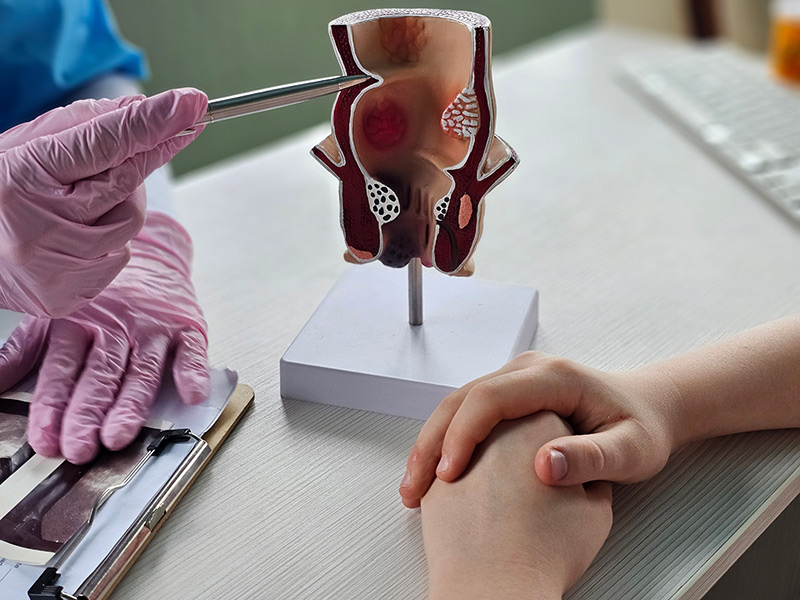
Symptoms That May Point Towards Surgery
The symptoms haemorrhoids cause can be just as important as their grade when deciding whether surgery should be considered. These may include:
- Persistent prolapse that may need to be pushed back inside
- Frequent or significant rectal bleeding
- Ongoing irritation or discharge
- Difficulty maintaining hygiene
- Recurrent swelling or discomfort
- Symptoms that interfere with everyday activities
How much these symptoms affect you also matters. Occasional discomfort may require a different approach from prolapse or bleeding that regularly disrupts your daily life.
Rectal bleeding should not automatically be attributed to haemorrhoids. As it can have other causes, your doctor may recommend further investigation before deciding on treatment.
When Symptoms Persist Despite Treatment
Haemorrhoid surgery may be considered when symptoms continue or repeatedly return despite appropriate treatment. This may be after changes to bowel habits, medication or office-based procedures such as rubber band ligation.
How well previous treatments worked, and how long any improvement lasted, can help your doctor determine whether surgery is an appropriate next step.
When Complications Affect the Treatment Decision
Most haemorrhoids do not cause serious complications, but certain changes may require more active treatment. A blood clot can develop within an external haemorrhoid, for example, causing sudden pain and swelling. Persistent bleeding may also contribute to anaemia in some cases.
Prolapsed haemorrhoids can occasionally become strangulated when their blood supply is restricted, resulting in severe pain and tissue damage. Infection can also occur, although this is less common.
These complications do not all require surgery, but they may require more prompt assessment and can influence the type and urgency of treatment needed.
Finding the Right Treatment for Haemorrhoids
The need for surgery is not determined simply by whether haemorrhoids are present. The more useful question is whether your symptoms and prolapse can be adequately controlled with less invasive treatment or whether they have reached a point where surgery may offer a more appropriate solution.
At Colorectal Practice in Singapore, you can have your symptoms assessed and your options explained based on your individual condition, so you have a clearer idea of what the next step may involve. The team is led by Medical Director and Senior Consultant Colorectal Surgeon Dr Dennis Koh, alongside Dr Sharon Koh and Dr Pauleon Tan. Arrange a consultation if your haemorrhoids are continuing to cause problems or you are unsure whether surgery may be necessary.
FAQs About Haemorrhoid Surgery
Can haemorrhoids be treated during a colonoscopy?
A colonoscopy is primarily used to examine the colon and rectum rather than routinely treat haemorrhoids. It may be recommended when rectal bleeding needs further investigation to rule out other possible causes. Haemorrhoid treatment can then be planned separately if needed.
Does haemorrhoid surgery require a hospital stay?
Some haemorrhoid procedures can be performed as day surgery, allowing you to return home on the same day. Whether an overnight stay is needed depends on the type of surgery, your general health and how you recover after the procedure.
Do I need to change my diet after haemorrhoid surgery?
Keeping stools soft can make bowel movements more comfortable during recovery. Drinking enough fluids and eating fibre-rich foods can help reduce constipation and straining. Stool-softening medication may also be recommended for a period after surgery.
Can haemorrhoid surgery affect bowel control?
Bowel control problems are not expected for most patients, but continence is an important consideration with surgery around the anal canal. Your surgeon can assess factors such as existing bowel control problems and previous anal surgery when discussing the potential risks with you.
Meet Our Colorectal Specialists in Singapore